How NYC Construction Projects Damage Nearby Trees: Protection & Recovery Guide
In New York City, the majority of the damage to trees in relation to construction is not done during storms or heat waves but instead done very quietly, during authorized building work. When a sidewalk replacement, a foundation dig, or a utility trench is cut into the same thin layer of soil where urban tree roots are preserved, it is in the same shallow layer of soil. Months later, a healthy tree in the street starts failing, and the property owner has to contend with infractions, estoppel expenses, or liability issues. The trees in NYC are planted in highly constrained, stressed conditions, whereas all trees in the suburban or rural environments are much less susceptible to the damage associated with construction. This guide mentions exactly how construction harms the surrounding trees in NYC, what the initial warning signs should be observed, and what the preventative measures and recovery strategies really do in the urban environment. Why NYC trees are uniquely vulnerable during construction The trees in NYC already have to endure stress in the city. And add building, and the margin on survival is absolutely slender. Some of the NYC-specific vulnerabilities are: Poor access to root zones by sidewalks, curbs, basements, utilities, and vaults. The soils of the compacted cities are low in oxygen and poorly drained. Root system in street and yard trees. Regulatory issues between DOB permits, DOT sidewalks, and the trees of the Parks Department. Contrary to trees in a forest, NYC trees are supported by a small share of working soil. Even destroying 10-20% of the root system, and degradation may set in within weeks. The most common ways construction damages nearby trees 1. Root severing during excavation and trenching Root cutting is the most devastating and widespread problem of construction in NYC. During: Foundation excavation Utility trenching (gas, water, sewer, electric) Sidewalk replacement Drainage or waterproofing job. There is regular cutting of structural and feeder roots without evaluation. Why this is catastrophic in NYC: The majority of tree roots lie in the 12-24 inches of soil. Roots usually go 2-3 times the width of the canopy. Felling of large roots makes trees unstable and interferes with the uptake of water. The immediate and delayed effects are: Sudden leaf drop or scorch Reduced canopy density Leaning or instability Increased risk of windthrow Delayed death 6-36 months delayed. 2. Soil compaction from heavy equipment and staging A tree can die alone by being compacted by soil, even without the cutting of roots. Common NYC scenarios: Dumpsters are set on root zones. Excavators were parked under canopies. Staged pallets of brick, cement,nt or steel in front of trunks. Compaction reduces: Oxygen availability Water infiltration Microbial activity Regeneration and growth of roots. Roots can be forced into suffocation in already compacted soils in NYC during the construction compaction. Symptoms are frequent and tend to manifest slowly: Fewer and fewer leaves each year. Sparse canopy Chronic dieback Pathogens take advantage of root weakness. 3. Grade changes and soil level alterations After waterproofing the basement trunks, backfilling against the trunks. Even a 2-4 inch grade change can: Smother surface roots Alter the moisture balance Root flare triggers trunk rot. Trees are made to fit accurately to the soil-to-trunk relationship. Trunk and bark damage from equipment and materials The destruction of the bark is not a cosmetic one, but rather a vascular one. Typical NYC causes: Skid steer contact Scaffolding installation Against trunks, materials were bent. Trees tied with chains and cables. Bark injuries disrupt nutrient flow and provide access points to: Decay fungi Insect pests Bacterial infections 5. Chemical exposure and construction runoff Construction brings with it substances that are not geared towards trees. High-risk exposures include: Concrete washout (highly alkaline) Mortar dust Fuel and hydraulic leaks Salt is used to de-ice prematurely. Even concrete runoff has the potential of increasing the soil pH to levels that cannot sustain life, thus sterilizing the root zone. NYC regulations most contractors ignore—but trees pay for Most property owners believe that the protection of trees is optional. In NYC, it is not. Key regulatory realities: The NYC Parks owns and controls street trees. Many of the permitted projects need Tree Protection Plans (TPP). Deforestation of safeguarded trees may lead to fines, stop-work orders, and required replacement. Nevertheless, enforcement is usually done when the damage is visible, and not when it might have been avoided. Early warning signs that your tree is being damaged by construction Watch these NYC red flags: Leaves are drying even with frequent watering. Abrupt weakness on the construction side. The appearance of cracks in the soil near the trunk. New lean after excavation Mushrooms in the base, or fungus. How to protect trees before construction starts Root zone mapping and exclusion areas Before any digging: Determine the Critical Root Zone (CRZ). Mark no-dig and no-storage boundaries. Where feasible, reposition foundation lines and trench paths. Effective fencing of trees (not orange cones). Effective fencing must: Be rigid and immovable Where possible, enclose the whole CRZ. Eliminate foot and equipment traffic. Air excavation instead of mechanical digging Where roots are present: In air spading, roots are not cut off. Enables routing of utilities around critical roots. Stabilizes stability and uptake capacity. Load distribution and soil protection systems. When access is unavoidable: Use ground protection mats Distribution of loads on a broader scale. Block pressure at root zones. Recovery options when damage has already occurred Not every damage caused by the construction can be fatal when dealt with in time and properly. Root zone remediation Includes: Excavation of the air to determine the damage. Selective root pruning Soil decompaction Organic modifications to NYC soils. Stability and stress-reduction pruning Structural pruning. When roots are lost: Lessen canopy load strategically. Enhance body weight distribution. Lower wind resistance It is not cosmetic pruning; it is risk management. Correction of soil chemistry and drainage. The soils that are built after construction are usually: Over-alkaline Compacted Hydrophobic Ongoing monitoring and risk assessment Damaged trees require: Seasonal evaluations Stability monitoring
Tree Emergencies in NYC High-Rise Buildings: Rooftop & Terrace Tree Care Challenges
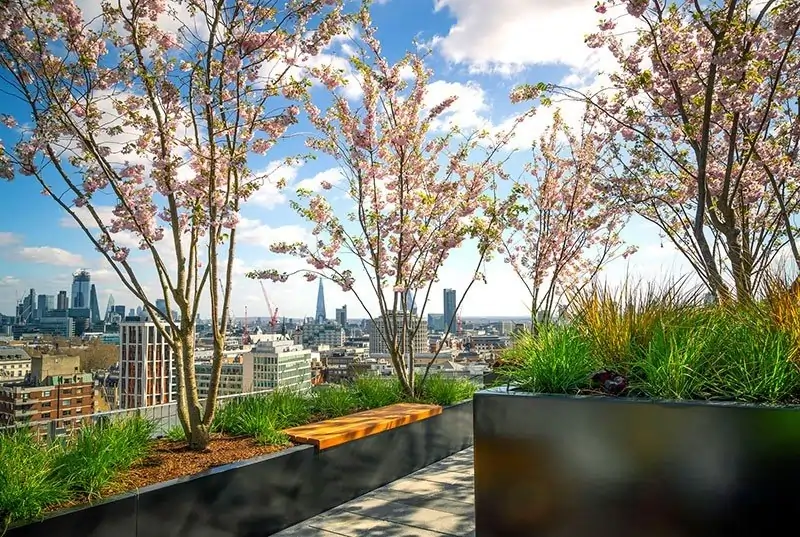
What actually happens if the 2,000-pound rooftop tree starts leaning toward a glass facade during a wind gust of 50 mph in Manhattan? This is not a hypothetical in New York City; it is an actual emergency that the managers of buildings, co-op boards, and even luxury condo inhabitants have to contend with more frequently than most people would guess. The emergence of trees in high-rise buildings in NYC is a particularly complex issue due to its characteristic combination of urban forestry and structural engineering, wind dynamics, and life-safety hazards into a single and extremely constrained space. Rooftop and terrace tree emergencies have no root errors as opposed to ground-level issues with trees. A single broken planter wall, failed root an, chor or water-soaked soil bed may worsen into falling debris, water penetration, or facade damage within a few minutes. The following experience-based breakdown of what renders these emergencies so difficult is provided below. The Rise of Rooftop & Terrace Trees in NYC In the past twenty years, the NYC high-rise developments have adopted green infrastructure. Now available in luxury condo towers, mixed-use towers, hotels, and corporate buildings: Mature tree rooftop gardens. Ornamental and shade trees on the terrace level. Stormwater systems incorporated with green roofs. Tree installations on the top of structural slabs with planting. Although they are visually impressive, such installations put trees in man-made environments where they were not meant to be part of the trees’ development. Contrary to the prevalent trees in streets with large volumes of soil and natural anchoring, the rooftop trees have limited containers,d shallow substrates, and harsh microclimates. The failure of these systems leads to a tree crisis rather than a landscaping problem. Why Tree Emergencies in High-Rise Buildings Are Uniquely Dangerous The risk of a falling branch at the street level is a danger. A collapsing tree is 40 stories high, and it is a potential disaster. The emergencies on rooftops and terrace trees include: Extreme fall distances Space directly below is occupied. Glass walls and curtain walls. Mechanical penthouses and heating, ventilation, and air conditioning. Roof assemblies and waterproofing membranes Environmental Forces That Accelerate Tree Failure at Elevation 1. Wind Load Amplification The skyline of NYC causes wind tunnel effects, which make the wind speed extremely high on heights. Rooftop trees are exposed to: Sustained high winds Sudden gusts Rotational shear forces Apply upward force on root systems. The rooftop trees, unlike the ground trees, which move about and also dissipate force by their deep root,s transfer wind stress directly to containers, soil mass, and structural anchors. 2. Limited Root Expansion & Artificial Soil Systems The trees that are planted on the rooftops normally thrive in man-made soil blends that are meant to minimise weight. Although structurally required, such soils: Drain faster Retain less organic matter Provide reduced anchorage Compact over time Once the roots attack the container walls, they start circling and girdling to make the long-term stability weaker. Healthy root systems on the surface could be weakened internally. 3. Thermal Stress from Urban Heat & Building Materials The heat is emitted by concrete, steel, teel, and glass. Rooftop environments are subjected to: Increased daytime temperatures. Rapid nighttime cooling Increased evapotranspiration Root zone variation of temperature. This causes chronic stress, slowness in root development, and vulnerability to storm failures. 4. Drainage Failures & Root Rot Drainage is one of the most frequent underground reasons for rooftop tree emergencies. Blocked downpipe or broken waterproof coating results in: Water-logged root zones Anaerobic soil conditions Fungal root decay Sudden loss of anchorage Structural root failure may be well developed even before the symptoms are manifested on the surface. Common Emergency Scenarios in NYC High-Rise Tree Care Leaning or Shifting Trees After Storms Arborists are often requested following nor’easters, tropical storms, or extreme thunderstorms: Leaning trees on rooflines. Shifting or cracks on containers. Root plates that drifted off the soil mass. It is an actual crisis that needs to be stabilized or eliminated. Cracked Trunks & Structural Splits Freeze-thaw, wind torque may result in: Vertical trunk splits Branch union compression cracks. Hidden internal decay These defects are uncompromising safety hazards at height. Hanging or Suspended Branches Over Occupied Areas Fractured bones trapped in the tree are threatening to: Residents using terraces Maintenance staff Windows and balconies below These should not be cut off but removed with precision rigging. Why Standard Tree Services Are Not Qualified for Rooftop Emergencies The majority of tree companies are prepared to do ground removals. Emergencies on rooftops need: High-tech rope access methods. Zero-drop dismantling Rigging systems are calculated with loads. The structural sensitivity of buildings. Working experience in occupied work areas. The Emergency Response Process for Rooftop Trees Step 1: Immediate Risk Assessment An arborist examines: Tree biomechanics Root stability Container integrity Wind exposure Access limitations All decisions are risk mitigating and not convenient. Step 2: Stabilisation or Manageable Removal. The response can include: Temporary anchoring systems. Canopy weight reduction Sectional dismantling Full emergency removal Step 3: Rigging and Debris. In high-rise environments: Debris cannot be dropped Strict weight limits of elevators. Noise and vibration should be regulated. The waterproof barrier should be safeguarded. This necessitates veteran crews that are specially trained to perform high-quality work. Preservation of Trees vs Emergency Removal: Making the Right Decision. Not all emergencies end in elimination. Arborists can recommend in some situations: Cabling and bracing systems Root anchoring retrofits Container reinforcement Specific structural pruning. Nevertheless, saving a tree that poses an immediate threat is no longer ethical and protective. Legal & Liability Implications for NYC Property Owners In New York City: The property owners are under a duty of care. Hazards that are documented should be addressed. This reduces liability by responding slowly. The claims can be rejected by insurance carriers as a result of negligence. The cases of the three emergencies are not mere cases of maintenance only. Preventative Rooftop Tree Care: Avoiding Emergencies Before They Happen The majority of rooftop emergencies can be avoided by: Yearly arborist examinations. Wind-load