What actually happens if the 2,000-pound rooftop tree starts leaning toward a glass facade during a wind gust of 50 mph in Manhattan?
This is not a hypothetical in New York City; it is an actual emergency that the managers of buildings, co-op boards, and even luxury condo inhabitants have to contend with more frequently than most people would guess. The emergence of trees in high-rise buildings in NYC is a particularly complex issue due to its characteristic combination of urban forestry and structural engineering, wind dynamics, and life-safety hazards into a single and extremely constrained space.
Rooftop and terrace tree emergencies have no root errors as opposed to ground-level issues with trees. A single broken planter wall, failed root an, chor or water-soaked soil bed may worsen into falling debris, water penetration, or facade damage within a few minutes. The following experience-based breakdown of what renders these emergencies so difficult is provided below.
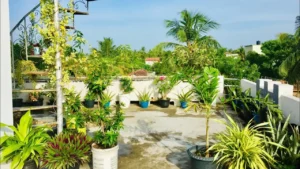
The Rise of Rooftop & Terrace Trees in NYC
In the past twenty years, the NYC high-rise developments have adopted green infrastructure. Now available in luxury condo towers, mixed-use towers, hotels, and corporate buildings:
- Mature tree rooftop gardens.
- Ornamental and shade trees on the terrace level.
- Stormwater systems incorporated with green roofs.
- Tree installations on the top of structural slabs with planting.
Although they are visually impressive, such installations put trees in man-made environments where they were not meant to be part of the trees’ development. Contrary to the prevalent trees in streets with large volumes of soil and natural anchoring, the rooftop trees have limited containers,d shallow substrates, and harsh microclimates.
The failure of these systems leads to a tree crisis rather than a landscaping problem.
Why Tree Emergencies in High-Rise Buildings Are Uniquely Dangerous
The risk of a falling branch at the street level is a danger. A collapsing tree is 40 stories high, and it is a potential disaster.
The emergencies on rooftops and terrace trees include:
- Extreme fall distances
- Space directly below is occupied.
- Glass walls and curtain walls.
- Mechanical penthouses and heating, ventilation, and air conditioning.
- Roof assemblies and waterproofing membranes
Environmental Forces That Accelerate Tree Failure at Elevation
1. Wind Load Amplification
The skyline of NYC causes wind tunnel effects, which make the wind speed extremely high on heights. Rooftop trees are exposed to:
- Sustained high winds
- Sudden gusts
- Rotational shear forces
- Apply upward force on root systems.
The rooftop trees, unlike the ground trees, which move about and also dissipate force by their deep root,s transfer wind stress directly to containers, soil mass, and structural anchors.
2. Limited Root Expansion & Artificial Soil Systems
The trees that are planted on the rooftops normally thrive in man-made soil blends that are meant to minimise weight. Although structurally required, such soils:
- Drain faster
- Retain less organic matter
- Provide reduced anchorage
- Compact over time
Once the roots attack the container walls, they start circling and girdling to make the long-term stability weaker. Healthy root systems on the surface could be weakened internally.
3. Thermal Stress from Urban Heat & Building Materials
The heat is emitted by concrete, steel, teel, and glass. Rooftop environments are subjected to:
- Increased daytime temperatures.
- Rapid nighttime cooling
- Increased evapotranspiration
- Root zone variation of temperature.
This causes chronic stress, slowness in root development, and vulnerability to storm failures.
4. Drainage Failures & Root Rot
Drainage is one of the most frequent underground reasons for rooftop tree emergencies. Blocked downpipe or broken waterproof coating results in:
- Water-logged root zones
- Anaerobic soil conditions
- Fungal root decay
- Sudden loss of anchorage
Structural root failure may be well developed even before the symptoms are manifested on the surface.
Common Emergency Scenarios in NYC High-Rise Tree Care
Leaning or Shifting Trees After Storms
Arborists are often requested following nor’easters, tropical storms, or extreme thunderstorms:
- Leaning trees on rooflines.
- Shifting or cracks on containers.
- Root plates that drifted off the soil mass.
It is an actual crisis that needs to be stabilized or eliminated.
Cracked Trunks & Structural Splits
Freeze-thaw, wind torque may result in:
- Vertical trunk splits
- Branch union compression cracks.
- Hidden internal decay
These defects are uncompromising safety hazards at height.
Hanging or Suspended Branches Over Occupied Areas
Fractured bones trapped in the tree are threatening to:
- Residents using terraces
- Maintenance staff
- Windows and balconies below
These should not be cut off but removed with precision rigging.
Why Standard Tree Services Are Not Qualified for Rooftop Emergencies
The majority of tree companies are prepared to do ground removals. Emergencies on rooftops need:
- High-tech rope access methods.
- Zero-drop dismantling
- Rigging systems are calculated with loads.
- The structural sensitivity of buildings.
- Working experience in occupied work areas.
The Emergency Response Process for Rooftop Trees
Step 1: Immediate Risk Assessment
An arborist examines:
- Tree biomechanics
- Root stability
- Container integrity
- Wind exposure
- Access limitations
All decisions are risk mitigating and not convenient.
Step 2: Stabilisation or Manageable Removal.
The response can include:
- Temporary anchoring systems.
- Canopy weight reduction
- Sectional dismantling
- Full emergency removal
Step 3: Rigging and Debris.
In high-rise environments:
- Debris cannot be dropped
- Strict weight limits of elevators.
- Noise and vibration should be regulated.
- The waterproof barrier should be safeguarded.
This necessitates veteran crews that are specially trained to perform high-quality work.
Preservation of Trees vs Emergency Removal: Making the Right Decision.
Not all emergencies end in elimination. Arborists can recommend in some situations:
- Cabling and bracing systems
- Root anchoring retrofits
- Container reinforcement
- Specific structural pruning.
Nevertheless, saving a tree that poses an immediate threat is no longer ethical and protective.
Legal & Liability Implications for NYC Property Owners
In New York City:
- The property owners are under a duty of care.
- Hazards that are documented should be addressed.
- This reduces liability by responding slowly.
- The claims can be rejected by insurance carriers as a result of negligence.
The cases of the three emergencies are not mere cases of maintenance only.
Preventative Rooftop Tree Care: Avoiding Emergencies Before They Happen
The majority of rooftop emergencies can be avoided by:
- Yearly arborist examinations.
- Wind-load pruning methods.
- Drainage and Soil volume assessment.
- Root health monitoring
- Structural container examinations.
Why NYC Requires Specialized High-Rise Tree Expertise
The City of NY has some special issues:
- Dense urban environments
- Limited crane access
- Complicated DOB compliance issues.
- Stringent building management measures.
- High public exposure risk
Maintenance of trees in NYC at heights is a discipline.
The Importance of Certified Arborists in High-Rise Emergencies
The qualified professional presents:
- Arboricultural science
- Urban forestry experience
- Understanding of structural risk.
- Adequacy in crisis decision-making.
- Proven safety protocols
Such professionalism safeguards individuals, property, and the worth of long-term properties.
Conclusion: Act Before a Rooftop Tree Becomes a Crisis
The rooftop and terrace trees make NYC buildings better, but they are also a true danger when not administered properly. It is not too late to wait until a tree leans, cracks, or fails. Situations where trees are in an emergency are rampant, and more so at high heights.
When your building needs emergency tree removal, tree risk assessment, or professional tree pruning of rooftop or terrace trees, professional assistance is necessary.
In New York City, the NYC Tree Pro can be contacted today because they have experienced, trusted, and safety-oriented high-rise tree services. In any case of complex rooftop and terrace tree emergencies, NYC Tree Pro is the right company to safeguard your building, your occupants, and your peace of mind. Check our reviews